Private label manufacturing in China is a governance project for a growing brand. The business must align product requirements, supplier capability, brand assets, packaging, IP, quality, inventory, and production decisions before the label appears on a commercial order.
Key Takeaways
- Start with a controlled product brief and a realistic production path.
- Clarify ownership and permitted use of designs, tooling, artwork, and supplier-developed changes.
- Use sample, pilot, inspection, and packaging gates before scaling.
Private label requires more than adding a logo
A private-label program changes the commercial relationship because the brand becomes responsible for the product promise. The brief should define the product, packaging, labeling, quality acceptance, IP controls, MOQ, sample, tooling, production, and delivery requirements. Supplier selection should consider process discipline as much as price.
| Area | What to examine | Evidence or decision output |
|---|---|---|
| Product | Which function, material, dimensions, performance, and quality criteria define the product? | Approved specification |
| Brand | Which artwork, packaging, labeling, and customer-facing information are controlled? | Artwork and packaging record |
| Scale | What pilot quantity, production gate, QC, inventory, and replenishment plan applies? | Stage-gate plan |
Build the brand-to-factory workflow
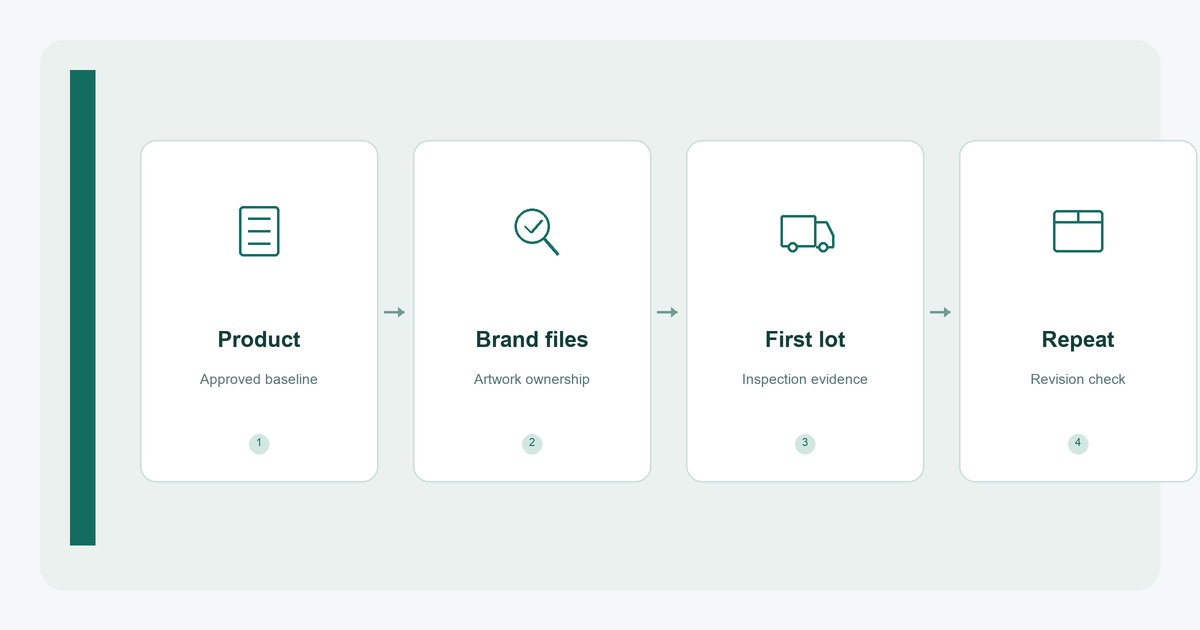
- Define the product and brand requirements before supplier outreach.
- Review supplier capability, sample, tooling, IP, MOQ, and production assumptions.
- Approve a pre-production version and inspection plan.
- Review the first batch before treating the supplier as a repeat partner.
Private label for Spain and Japan
This article uses Spain and Japan as the destination-market lenses. Spanish brands may need packaging and distribution requirements that work across the local and wider European operation. Japanese brands may need especially precise technical information and consistent packaging records. Destination-market review should happen before mass production.
Define the approved product and brand package
List which aspects of the project use an existing supplier design and which are custom. Separate the physical product, brand artwork, packaging, accessories, instructions, and destination variants. Ask the supplier to explain any design constraints before marketing commits to a launch promise. A logo change can still affect tooling, print setup, minimum quantities, or packaging procurement.
Name the buyer-side owners for product approval, brand approval, purchasing, destination review, and shipment release. Define who can accept a proposed substitute or approve additional spending. Giving the supplier several independent buyer contacts without a decision hierarchy can create conflicting instructions and repeated sample revisions.
A private-label launch control register
- Product baseline: record the specification, approved reference, materials, variants, and required quality checks.
- Brand assets: identify each approved artwork or packaging file, version, permitted use, and the buyer contact who controls changes.
- Production assets: record any tooling, print plates, dies, or other assets, their custody, agreed ownership, and access arrangements.
- Commercial commitments: separate product MOQ, packaging MOQ, setup costs, sample charges, and recurring unit costs.
- Release: connect sample approval, destination review, first-lot inspection, and dispatch authorization to the same project record.
Check the mismatch between product and packaging MOQ
A hypothetical brand may want a smaller product pilot than the packaging supplier’s economical print run. Ask for separately priced packaging alternatives, plain packaging with an approved label, or a larger packaging purchase held for later use. Compare the total commitment, storage conditions, revision risk, and cash exposure rather than only the first order’s unit price.
Record ownership of unused packaging and who pays for storing, transferring, or destroying it under the agreement. Identify what happens if the brand changes its artwork before the stock is consumed. These decisions prevent a later replenishment order from becoming a dispute about materials purchased for a design the brand no longer uses.
Approve the first lot with evidence
Have the inspector use the approved product and pack references. Check product identity, brand placement, print version, accessory completeness, packing count, and the technical checks agreed for the product. Record differences separately so the responsible supplier receives the correct action. A passed logo check does not demonstrate acceptable product function.
For Spain and Japan launches, obtain actual destination requirements from the responsible reviewer before mass production. The brand should not assume that a supplier’s prior exports make the new private-label product ready for both markets. Product-specific documentation and market-facing information need their own review and version control.
Preserve brand control when the project scales
Put confidentiality, permitted use, asset access, and supplier reuse conditions into the relevant commercial agreements, with professional advice where needed. Maintain your own copies of approved files and decisions. Supplier custody of production assets and legal ownership are separate questions; document both rather than relying on a casual conversation.
After the pilot, compare the approved baseline with actual defects, packaging problems, supplier changes, lead times, and replenishment costs. Decide which issues require correction before scaling. Keep optional design improvements separate from mandatory corrective actions. A growing brand benefits from a stable repeat-order baseline that can be revised deliberately, rather than redesigned informally with every shipment.
Use a replenishment revision check
Before repeating the order, confirm whether the supplier, artwork, material, packaging inventory, destination instructions, or quality requirements have changed. List differences against the approved baseline and obtain the relevant approvals. A repeat order should not inherit obsolete files because the SKU name remains the same. Preserve the production lot reference so destination feedback can be traced to the version actually supplied.
How Fishgoo Helps
For this workflow, Fishgoo can help coordinate private-label sourcing, packaging customization and supplier quality coordination, subject to the confirmed product and destination scope. Its service overview describes China-side sourcing, quality, warehouse and shipping support. Bring the approved product brief, quantity, supplier status, destination and open issues to the discussion. Confirm deliverables, fees, reporting and approval rights before work begins. The buyer retains commercial decisions and destination-market responsibilities; no automatic channel integration or guaranteed outcome is assumed.
Discuss your China sourcing and fulfillment workflow with Fishgoo.
FAQ
Is private label the same as OEM?
Not always. Private label often uses an existing product with brand and packaging changes, while OEM usually involves a buyer-defined product or specification. Confirm the actual development and ownership arrangement.
How can a brand protect its private-label design?
Use supplier controls, written agreements, access limits, production monitoring, and professional legal advice appropriate to the markets involved.
What is the first step?
Write the product, packaging, quality, brand, IP, MOQ, and delivery brief before selecting a supplier.
See Also
China Product Sampling for Commercial Buyers: From Brief to Approval
MOQ Negotiation in China: How Importers Build a Viable First Order
3PL vs Integrated Sourcing Partner: Which Operating Model Fits Your Business?
China Supplier RFQ Template: What to Include Before Requesting Quotes
How Importers Reduce China Freight Costs Without Sacrificing Service