
A product sample is a commercial approval gate between supplier discovery and bulk production. For a business buyer, sampling should test the specification, function, materials, packaging, cost assumptions, and supplier responsiveness before the company commits more capital.
Key Takeaways
- Define the sample against a written commercial brief.
- Record every deviation, requested change, and approval decision.
- Use the approved sample as a reference for production and inspection.
What a commercial sampling process must prove
The purpose of a sample is not only to see whether the product looks acceptable. It should show whether the supplier understood the brief and can produce the required result. Ask the supplier to identify materials, dimensions, components, packaging, sample cost, lead time, and what will change in mass production.
| Area | What to examine | Evidence or decision output |
|---|---|---|
| Specification | Does the sample match the approved dimensions, materials, function, and finish? | Measured sample record |
| Supplier capability | Can the supplier explain process, MOQ, production plan, and quality controls? | Written supplier response |
| Scale readiness | What will remain the same or change in bulk production? | Pre-production confirmation |
Move from sample approval to purchase order
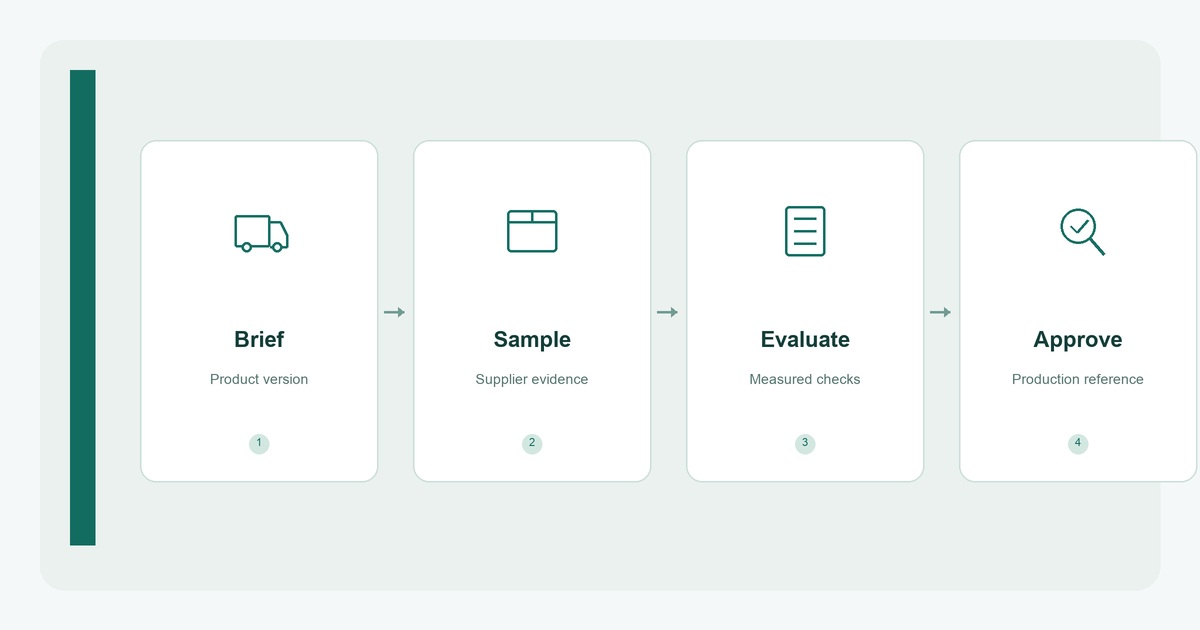
- Issue a version-controlled sample brief.
- Inspect and record measurements, photos, tests, packaging, and deviations.
- Send one consolidated change list to the supplier.
- Approve the final version and link it to the purchase order and inspection plan.
Sampling for Spain and Japan
This article uses Spain and Japan as the destination-market lenses. For Spain, include packaging, labeling, and warehouse-handling requirements that affect local distribution. For Japan, confirm technical terms, measurements, and written change records carefully. Destination-market checks should be completed before the sample is treated as ready for commercial release.
Choose the question each sample must answer
Before ordering a sample, distinguish supplier screening, design development, packaging evaluation, and pre-production approval. A catalog sample can demonstrate an existing product, but it may not prove the custom material or packaging proposed for your order. State the intended decision and ask the supplier which aspects of the sample represent eventual production.
Record the requested product version, material, dimensions, function, finish, accessories, and packaging. Include a question list for anything the supplier cannot yet confirm. Agree whether the supplier is allowed to propose alternatives and how those alternatives will be identified. An unrecorded substitute can make an attractive sample misleading.
A sample evaluation sheet your team can reuse
- Reference: identify the supplier, sample number, brief revision, receipt date, and the order or product development project it supports.
- Check: list the characteristic, test or measurement method, required condition, observed result, and evidence file for each important requirement.
- Deviation: classify the difference as unacceptable, conditionally acceptable, or requiring more information. Name the person authorized to decide.
- Action: give the supplier one consolidated correction list with the affected reference and the evidence needed to close each issue.
- Approval: record the approved version, remaining limitations, required production checks, and the location of the retained reference sample.
Keep the supplier response connected to the evidence
Send annotated photographs, measurements, and numbered comments together. Ask the supplier to answer each item individually. A general response such as “all problems will be corrected” does not establish which material, dimension, or assembly method will change. Confirm whether the remedy affects unit cost, lead time, tooling, or other approved features.
Use a hypothetical example: a storage product fits the required dimensions but its lid does not perform as intended. The buyer should define the relevant function and test conditions with the technical reviewer, rather than asking only for a tighter lid. Request a revised sample tied to the changed requirement and compare it with the original evaluation sheet.
Distinguish sample acceptance from commercial release
A product can pass the sample check while other purchasing conditions remain unresolved. Confirm production materials, packaging versions, order quantity, quality checks, documents, and delivery scope before authorizing bulk manufacture. Record features that will differ between handmade samples and production units. Decide what additional evidence the first commercial lot must provide.
Have the Spain or Japan destination team review the actual product and intended distribution requirements before release. Sampling does not replace product-specific compliance work. For Japan imports, Japan Customs’ import procedures provide an official starting point for the documentation process. Assign the actual product review to the responsible specialist.
Preserve the approved reference through production
Identify who keeps the physical sample and who receives photographs and written specifications. Mark the sample so it can be distinguished from rejected or earlier versions. Link the reference to the purchase order and inspector’s brief. If the product changes after approval, issue a revision rather than silently replacing a file in the shared folder.
When the first production lot arrives, compare both its product evidence and the supplier’s change history with the approved baseline. Record discrepancies that the sampling process failed to detect. Use those findings to improve future sample requests. A useful sampling system ends with a controlled production reference, rather than a positive reaction to an isolated item.
Keep rejected samples identifiable
Retain rejected versions long enough to explain the correction and prevent them from being reused accidentally as a production reference. Mark the sample and its photograph with the decision. If different reviewers disagree, resolve the requirement before sending another change request. An approval should state which features passed and which remain open, rather than relying on a general comment that the sample is acceptable.
How Fishgoo Helps
For this workflow, Fishgoo can help coordinate sample sourcing, supplier clarification and production-reference coordination, subject to the confirmed product and destination scope. Its service overview describes China-side sourcing, quality, warehouse and shipping support. Bring the approved product brief, quantity, supplier status, destination and open issues to the discussion. Confirm deliverables, fees, reporting and approval rights before work begins. The buyer retains commercial decisions and destination-market responsibilities; no automatic channel integration or guaranteed outcome is assumed.
Discuss your China sourcing and fulfillment workflow with Fishgoo.
FAQ
How many samples should an importer order?
Order enough to evaluate product variation and the intended inspection risk. The right number depends on product complexity, supplier confidence, and the commercial decision.
Can a sample guarantee mass-production quality?
No. It is an approval gate, not a guarantee. Connect the approved sample to production instructions and later inspection checkpoints.
What if the supplier changes the product after sample approval?
Pause approval, record the change, update the specification, and require the buyer’s written decision before production continues.
See Also
China Supplier RFQ Template: What to Include Before Requesting Quotes
Private Label Manufacturing in China: Governance for Growing Brands
MOQ Negotiation in China: How Importers Build a Viable First Order
3PL vs Integrated Sourcing Partner: Which Operating Model Fits Your Business?
Custom Packaging in China: Procurement, Quality, and Brand-Control Workflow