
Custom packaging is a procurement project that affects brand control, product protection, warehouse handling, and destination delivery. Importers should manage packaging as part of the product specification rather than as an afterthought added after manufacturing.
Key Takeaways
- Approve packaging structure and artwork with the same discipline as the product.
- Request a physical sample and confirm materials, dimensions, marks, and packing quantities.
- Protect artwork, tooling, and change records throughout the supplier relationship.
The packaging brief should be measurable
A supplier cannot reliably quote or produce packaging from a brand mood board alone. The brief should define the structure, dimensions, material, board or film requirements, finish, artwork, inserts, carton configuration, labels, and acceptable variation. It should also state how the packaging will be checked before mass production.
| Area | What to examine | Evidence or decision output |
|---|---|---|
| Structure | What dimensions, folds, closures, inserts, and protection requirements apply? | Approved dieline and physical sample |
| Artwork | Which logo, colors, language, marks, and revision are approved? | Controlled artwork file and approval record |
| Commercial | What are MOQ, tooling, sample, lead time, carton quantity, and delivery terms? | Comparable packaging RFQ |
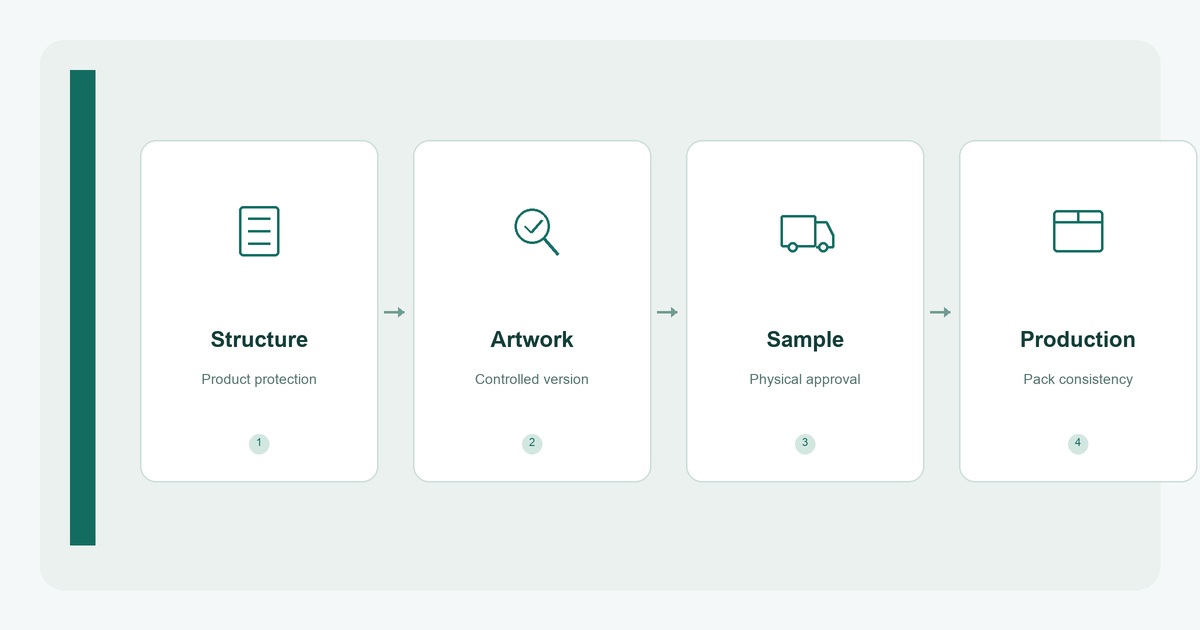
Move from sample to production
- Send a controlled packaging brief to qualified suppliers.
- Review a physical sample for fit, print, finish, strength, and packing efficiency.
- Approve artwork and structural changes in writing.
- Inspect the first production run and retain the approved sample as a reference.
Packaging for Spain and Japan
This article uses Spain and Japan as the destination-market lenses. Spanish brands may need packaging that works for local warehousing and distribution across a broader European network. Japanese brands may need especially disciplined product information, carton marks, and language review. In both cases, destination requirements should be checked with the relevant local professional before production.
Separate packaging structure from artwork approval
Create two connected approval records. The structural record defines the pack dimensions, product fit, material, closures, inserts, and carton arrangement. The artwork record identifies the approved file, version, print location, colors, text, and destination variant. A visually attractive proof cannot demonstrate that the package protects the product or fits the warehouse process.
Ask the packaging supplier to identify the production method used for the sample and for the commercial run. If the sample uses a different process, record which features it can prove and which need further confirmation. Have the product owner approve technical choices and the destination team review market-facing information before releasing the final files.
A reusable packaging approval register
- Identity: record the product SKU, pack SKU, revision, destination, supplier, and approval owner. Link the register to the purchase order.
- Physical fit: record the product dimensions, protective components, assembled pack dimensions, and the agreed fit-check method.
- Print control: list the source file, proof date, approved reference, readable text, and the process for accepting print differences.
- Warehouse handling: confirm units per carton, variant separation, labels, carton measurements, and the receiving team’s identification method.
- Commercial terms: separate sample, setup, tooling, print, assembly, storage, and recurring unit costs. Identify surplus packaging ownership.
Test the complete pack rather than an empty box
Place the approved product inside the proposed packaging and perform the checks chosen by the responsible technical team. Examine movement, closure, accessory placement, label readability, and the ability to remove the product without unintended damage. Use the actual carton configuration where possible. A flat artwork proof and an empty sample do not reveal every packing problem.
For an illustrative Spain replenishment order, the distributor might request a particular carton label to reconcile receipts. A Japan buyer might request separate artwork versions for different retail programs. Neither requirement is universal. Obtain the actual receiving and commercial requirements in writing and identify who approves the final version for each destination.
Control late changes and leftover stock
Suppose the brand changes an insert after approving the pack. Ask which packaging has already been purchased or printed, what can be modified, and which order will introduce the new version. Compare the cost of rework with the cost and risk of using existing stock. Keep the old version identifiable while the business decides.
Send one consolidated change notice to the product supplier, packaging supplier, inspector, and packing facility. Request acknowledgement from every affected party. Update the inspection reference and carton instructions together. Changing only the artwork file can leave the warehouse using an old insert while procurement believes the new version has been released.
Protect continuity across repeat orders
Record ownership and permitted use of artwork, dies, plates, molds, and other production assets in the commercial agreement. Confirm where assets are held and how the brand can obtain its records when changing supplier. Obtain appropriate professional advice for the actual ownership and confidentiality arrangement rather than assuming payment alone resolves every right.
After receiving the first shipment, compare the approved pack with packing errors, handling damage, storage fit, and feedback from the destination team. Keep product defects separate from packaging defects so corrective actions reach the right supplier. Revise the brief with evidence, approve the new baseline, and keep the earlier version for traceability.
Set the inspection reference before the print run
Give the inspection team the approved pack, artwork revision, and a checklist of observable features. Identify whether color or finish needs a physical reference rather than an on-screen image. Agree how defects will be recorded and which differences require a hold. Keep acceptance decisions with the brand owner, and send the resulting release instruction to the packing facility before finished goods are combined.
How Fishgoo Helps
For this workflow, Fishgoo can help coordinate packaging supplier coordination, sample checks and approved packing instructions, subject to the confirmed product and destination scope. Its service overview describes China-side sourcing, quality, warehouse and shipping support. Bring the approved product brief, quantity, supplier status, destination and open issues to the discussion. Confirm deliverables, fees, reporting and approval rights before work begins. The buyer retains commercial decisions and destination-market responsibilities; no automatic channel integration or guaranteed outcome is assumed.
Discuss your China sourcing and fulfillment workflow with Fishgoo.
FAQ
Why is a physical packaging sample important?
Digital artwork may not reveal structural, material, color, finishing, or product-fit problems. A physical sample gives procurement and QC a common reference.
Who owns packaging artwork and tooling?
Ownership depends on the commercial and legal agreement. Define permitted use, access, tooling custody, and supplier reuse before production.
Can Fishgoo source custom packaging?
Fishgoo can help coordinate sourcing and packaging workflows where the service is available. Confirm the exact packaging, QC, and warehouse scope for your project.
See Also
China Supplier Due Diligence: A Verification Checklist for Importers
China Product Sampling for Commercial Buyers: From Brief to Approval
Private Label Manufacturing in China: Governance for Growing Brands
Shopify Order Fulfillment from China for Multi-Market Operations
How Importers Reduce China Freight Costs Without Sacrificing Service