
Reducing China freight cost is a commercial trade-off, not a search for the cheapest carrier. Importers should compare packaging, consolidation, mode, route, warehouse handling, delivery term, and service reliability against the cost of stockouts, damage, and delays.
Key Takeaways
- Reduce avoidable chargeable weight and fragmented handling first.
- Compare total landed cost and service reliability, not freight price alone.
- Use consolidation and route planning when the cargo pattern supports it.
Where freight cost usually comes from
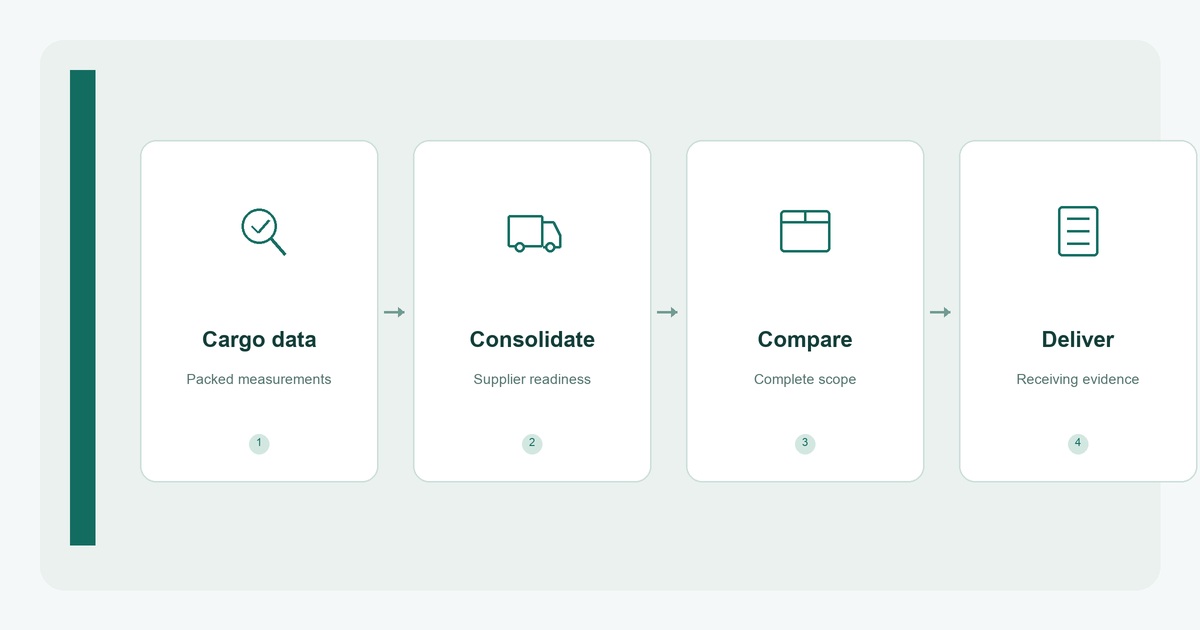
Freight cost is shaped by product dimensions, packaging, weight, volume, route, mode, minimum charges, handling, storage, customs, local delivery, and urgency. Before negotiating a rate, check whether the cargo data is accurate and whether several supplier shipments can be planned together.
| Area | What to examine | Evidence or decision output |
|---|---|---|
| Cargo | Are dimensions, weight, carton count, and packaging measured after production? | Verified cargo profile |
| Network | Can orders be consolidated or routed through the right warehouse and mode? | Shipment plan |
| Service | What delivery, tracking, damage, and exception scope is included? | Comparable logistics quote |
Reduce cost without weakening control
- Improve packaging and carton configuration without reducing product protection.
- Plan supplier delivery into one China receiving and consolidation window.
- Compare air, sea, rail, express, and DDP scenarios on landed cost.
- Review actual cost and damage or delay performance after each shipment.
Spain and Japan freight decisions
This article uses Spain and Japan as the destination-market lenses. For Spain, consider whether China consolidation and Spain-based inventory can reduce repeated small shipments. For Japan, compare route speed with the cost of holding inventory and the need for accurate documents and delivery coordination.
Build an accurate cargo record before negotiating
Ask the supplier or warehouse for final packed measurements, gross weight, carton count, packing configuration, and cargo-ready date. Distinguish preliminary product dimensions from the actual transport pack. If packaging changes after quotation, request an updated comparison. A low rate based on incomplete cargo data may no longer apply to the goods that actually ship.
Confirm any handling restrictions, special cargo characteristics, and documentation needs with the responsible providers. Have them identify the measurement and charging basis used for their quotations. Different routes or services may price the same cargo differently. Keep those bases visible instead of comparing quoted numbers that describe different services.
A freight-cost comparison worksheet
- Shipment: record the approved product group, packed weight and dimensions, quantity, readiness date, and required destination availability.
- Origin: list supplier collection, receiving, inspection, sorting, repacking, consolidation, storage, and export-related scope.
- Transport: identify the mode, booking assumptions, service coverage, insurance arrangement, and any stated rate validity.
- Destination: record handling, customs coordination, local delivery, appointments, unloading, and charges excluded from the proposal.
- Decision: compare complete operating costs and service implications, with estimates and unknown amounts clearly marked.
Evaluate consolidation against inventory timing
Consolidating several supplier receipts may reduce repeated minimum charges or duplicated handling, but waiting for the last supplier also delays the earlier goods. Compare the consolidation opportunity with customer commitments and the cost of keeping stock unavailable. Identify which products can wait and which require separate release. Do not make one supplier’s delay automatically hold every market’s inventory.
Consider an invented comparison in one currency: two separate shipments cost 900 each, while consolidation costs 1,400 plus 150 of extra handling and storage. The apparent operating saving is 250 before other differences. If waiting requires an additional urgent shipment, include that cost too. These figures illustrate the method and are not current transport rates.
Test packaging changes with the product owner
Measure whether a proposed carton change reduces transport space or handling effort. Check product protection, stacking, pack identification, and receiving requirements before adopting it. Request an appropriate sample or trial pack and use the tests selected for the actual goods. Removing protective material may reduce the invoice while increasing damage and replacement costs.
Have the Spain or Japan receiving team review any changed carton quantity or configuration. A smaller transport pack can create extra destination sorting if it no longer matches the agreed replenishment unit. Compare the full chain rather than optimizing the China departure alone. Record the approved pack revision so suppliers and inspectors use the same version.
Reduce urgency by improving order coordination
Review why previous shipments became urgent. Late sample approval, incomplete documents, missed production milestones, and uncertain stock records need different remedies. Assign a corrective action to the actual source of delay. Repeatedly selecting a faster route can conceal a purchasing or information problem while making the logistics budget harder to control.
After delivery, reconcile the quoted scope with final invoices and accepted units. Compare cost per ordered unit and cost per saleable unit where losses affect the result. Keep customs and tax calculations separate from internal allocation decisions. Official EU importing guidance provides a starting point for destination requirements; the actual product and transaction need their own review.
Keep urgent exceptions visible in the cost review
Code an expedited shipment separately from the ordinary replenishment route and state the reason it became necessary. Review whether the trigger was commercial demand, supplier delay, quality failure, or missing information. This allows procurement to decide which process needs improvement. A blended average transport cost can conceal recurring emergency work and make a genuinely efficient planned route appear expensive.
How Fishgoo Helps
For this workflow, Fishgoo can help coordinate cargo measurements, consolidation and shipment scope coordination, subject to the confirmed product and destination scope. Its service overview describes China-side sourcing, quality, warehouse and shipping support. Bring the approved product brief, quantity, supplier status, destination and open issues to the discussion. Confirm deliverables, fees, reporting and approval rights before work begins. The buyer retains commercial decisions and destination-market responsibilities; no automatic channel integration or guaranteed outcome is assumed.
Discuss your China sourcing and fulfillment workflow with Fishgoo.
FAQ
Does consolidation always reduce cost?
No. It can reduce repeated freight and handling, but storage, waiting time, repacking, minimum charges, and delivery timing must be included.
Should an importer choose the lowest freight quote?
Only after confirming the same cargo data, scope, route, documents, delivery point, and exception terms.
Can better packaging lower freight cost?
It may reduce dimensional weight or damage, but packaging changes should be tested for product protection and warehouse handling before approval.
See Also
Private Label Manufacturing in China: Governance for Growing Brands
Short-Video Commerce Supply Chains: Operational Requirements for Spain and Japan
Custom Packaging in China: Procurement, Quality, and Brand-Control Workflow
China Product Sampling for Commercial Buyers: From Brief to Approval
How Shopify Brands Can Build a China Supply Chain for Spain and Japan