

When short-video commerce changes demand patterns, the supply chain must change with it. Brands serving Spain or Japan need to plan for volatile orders, faster inventory decisions, tighter fulfillment expectations, and stronger control over quality, packaging, and destination requirements.
Key Takeaways
- Treat demand volatility as a planning and supplier-capacity problem.
- Use a staged inventory and fulfillment model for campaign-driven products.
- Measure order, quality, stock, delivery, and returns together.
The operational shift behind short-video commerce
A content campaign can create a demand spike before the supply chain has validated the product or secured stock. The brand therefore needs a readiness process: supplier and sample approval, inventory visibility, packaging and QC, order capacity, route selection, and a contingency plan if demand exceeds the forecast.
| Area | What to examine | Evidence or decision output |
|---|---|---|
| Demand | What is the expected base, spike, and decay pattern for the campaign? | Scenario forecast |
| Capacity | Can supplier, inspection, warehouse, and carrier capacity absorb the order signal? | Capacity check |
| Control | What triggers campaign throttling, replenishment, or a route change? | Decision thresholds |
Build a channel-independent control tower
- Connect campaign assumptions to SKU-level inventory and supplier plans.
- Set readiness gates before content or promotion is scaled.
- Track operational KPIs during the demand spike.
- Review the result and update forecast, supplier, and fulfillment rules.
Spain and Japan market execution
This article uses Spain and Japan as the destination-market lenses. Spain may require a quick decision about China stock versus local inventory. Japan may require tighter product information and communication discipline before scaling. Use a common control framework with separate market assumptions.
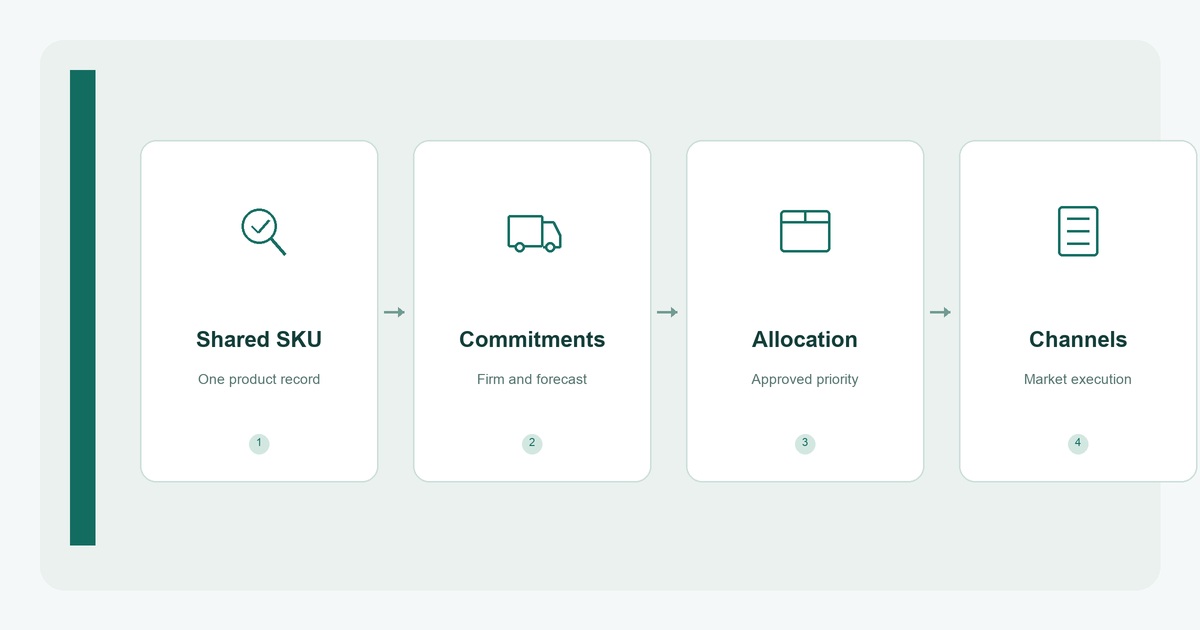
Plan demand across channels that share the same stock
List the channels and customer programs using each physical SKU. Include wholesale commitments, the brand’s storefront, short-video campaigns, and other marketplaces where relevant. Map any channel-specific identifiers to the common product and destination version. Shared product names do not prove the units are interchangeable when packaging or accessories differ.
Give every demand input a status: firm commitment, ordinary forecast, planned campaign, or unvalidated opportunity. Short-video interest can change quickly, but it should not silently displace accepted business commitments. Assign the commercial priority before promotion creates orders the available stock cannot support.
A channel allocation worksheet
- Common SKU: identify the approved product version, market pack, supplier, and warehouse location used by each channel.
- Usable supply: record accepted stock, existing reservations, inspection holds, and confirmed arrivals with their eligible dates.
- Demand: separate firm orders from forecast quantities and record the source and date of each campaign assumption.
- Priority: state the rules for wholesale commitments, repeat customers, campaign limits, and reassignment of unconsumed allocations.
- Trigger: identify the event that changes procurement, promotion, routing, or allocation, and the person authorized to make that change.
Test a sudden campaign spike against other commitments
Suppose an illustrative brand has 1,000 accepted units shared by a Spain distributor, a Japan retail program, and a short-video promotion. The distributor has 400 committed units and the Japan program has 250. Before other reserves, 350 units remain. A promotion targeting 500 units therefore needs a decision about additional eligible supply or a lower campaign allocation.
Do not subtract the same commitments twice if they already appear as reserved stock in your system. Reconcile the physical stock and reservations first. These invented quantities show how allocation works; they do not establish a recommended stock policy. Confirm the actual production and receiving dates before treating replenishment as a solution to the gap.
Separate demand signals from procurement authorization
Views, clicks, waitlists, and orders provide different evidence. Record which signal supports a forecast change and whether it has translated into repeat demand. A short-lived attention spike may justify a controlled campaign allocation without justifying a large irreversible product commitment. Show low, base, and high demand cases alongside supplier and cash constraints.
Ask procurement to identify the latest decision date for the proposed replenishment. If the product cannot arrive within the expected selling window, explain the trade-off to the commercial owner. The response might be a limited offer, an alternative product, or a later campaign. Buying urgently without a defined demand window can replace a shortage with obsolete stock.
Create a market-specific exception review
Review Spain and Japan as separate operating plans where customers, routes, receiving requirements, or approved pack versions differ. Share supplier and quality records where they genuinely apply to both. Confirm channel availability and current platform rules through the relevant official resources before launching a market-specific program; this planning framework does not assume identical channels in both countries.
After the demand event, compare allocated units, actual orders, cancellations, accepted receipts, stock transfers, and remaining inventory. Examine whether one channel’s optimistic forecast repeatedly consumes stock needed elsewhere. Adjust allocation and replenishment rules using that evidence. This article focuses on the shared planning system; individual campaign release and packing controls should follow the separate campaign-governance procedure.
Review allocation changes as commercial decisions
Keep a log when stock moves from one market or channel allocation to another. Record the reason, affected commitments, owner, and replacement plan. Repeated reallocations may show that forecasts or priorities need revision. Without that record, every team can believe its demand was approved while the shared physical inventory cannot cover the total. Use the review to change the planning assumptions rather than merely correcting the stock count.
How Fishgoo Helps
For this workflow, Fishgoo can help coordinate supplier coordination, stock visibility and multi-market shipment planning, subject to the confirmed product and destination scope. Its service overview describes China-side sourcing, quality, warehouse and shipping support. Bring the approved product brief, quantity, supplier status, destination and open issues to the discussion. Confirm deliverables, fees, reporting and approval rights before work begins. The buyer retains commercial decisions and destination-market responsibilities; no automatic channel integration or guaranteed outcome is assumed.
Discuss your China sourcing and fulfillment workflow with Fishgoo.
FAQ
Does a demand spike always justify bulk production?
No. Confirm the quality, repeatability, margin, delivery promise, and replenishment plan before committing to a larger order.
How can a brand protect customers during a stockout?
Use accurate inventory, clear availability rules, staged campaigns, backorder decisions, and a documented communication process.
Which team should own the readiness gate?
Sales or marketing can trigger the review, but procurement, quality, operations, logistics, and finance should approve the commercial readiness together.
See Also
How Shopify Brands Can Build a China Supply Chain for Spain and Japan
TikTok Shop Supply Chain Governance for Brands
Seasonal Inventory Planning for Importers Serving Spain and Japan
Demand Forecasting for Importers: Linking Sales Plans to China Replenishment
Shopify Order Fulfillment from China for Multi-Market Operations