

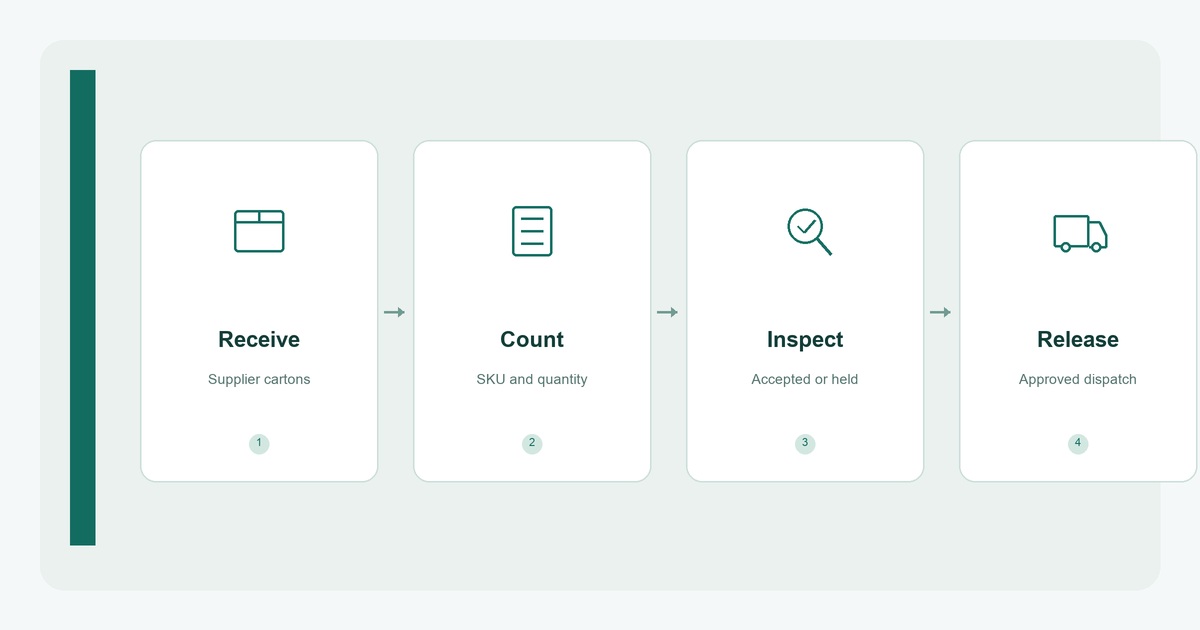
A China fulfillment center should be evaluated as an operating node in your supply chain, not simply as a place that stores cartons. For a B2B importer or brand, the center affects receiving accuracy, inspection, consolidation, inventory visibility, dispatch, and the quality of the handoff to Spain or Japan.
Key Takeaways
- Match the facility to your SKU complexity, order pattern, and destination service promise.
- Verify receiving, inventory, QC, consolidation, and exception processes before comparing price.
- Use a pilot to measure data accuracy and operational reliability.
What to evaluate before choosing a facility
Start with the work the warehouse must perform. A facility that handles single-SKU cartons may not be prepared for mixed inbound deliveries, product inspection, custom packaging, or multiple release rules. Ask for evidence of how goods are received, identified, counted, stored, inspected, consolidated, and dispatched.
| Area | What to examine | Evidence or decision output |
|---|---|---|
| Receiving | Can the team match supplier cartons to purchase orders, SKUs, quantities, and condition? | Inbound record and discrepancy process |
| Inventory | How are stock location, available quantity, reserved quantity, and damaged stock recorded? | Inventory report and adjustment rules |
| Outbound | How are pick, pack, inspection, documents, and carrier handoff controlled? | Release checklist and exception log |
Run a warehouse pilot
- Send one product category or supplier with a clear packing list.
- Check receiving time, discrepancy handling, inspection evidence, and inventory updates.
- Test one consolidation or routing change before a larger dispatch.
- Review actual handling, storage, and delivery costs against the quote.
Spain and Japan operating lens
This article uses Spain and Japan as the destination-market lenses. For Spain, include the path from China inventory to Spanish warehouse or distribution operations when local stock is part of the plan. For Japan, pay closer attention to specification accuracy, carton information, communication records, and the handoff to the Japan-side receiving team.
Write a warehouse brief before requesting prices
Describe the actual inbound and outbound workload rather than asking for a generic storage rate. List the number of active SKUs, unit and carton identifiers, supplier count, typical receipt size, storage conditions, and expected order pattern. Distinguish bulk replenishment for a distributor from individual customer orders. The handling effort differs even when both occupy the same shelf space.
Include a sample packing list and an example outbound instruction. Explain whether goods arrive already labeled, need sorting by variant, require inspection, or must wait for several suppliers before consolidation. Ask the facility to identify tasks it cannot perform. A declared limitation is easier to plan around than an unclear promise covering every possible activity.
A facility assessment worksheet
- Inbound identification: request an example receipt linking the supplier, purchase order, SKU, carton quantity, and discrepancy photographs. Confirm who resolves an unidentified carton.
- Stock status: distinguish accepted, reserved, damaged, and inspection-held units. Ask whether a held lot can accidentally appear in a dispatch list.
- Location control: check how variants are separated and how moved stock is recorded. Request a demonstration using two similar products.
- Release control: identify who authorizes packing, substitutions, repacking, and final carrier handoff. Require a record of changed instructions.
- Cost visibility: separate receiving, storage, inspection, picking, packaging, consolidation, and exceptional handling. Record the unit used for each fee.
Run a pilot that includes an exception
Use one product family with enough variation to test the proposed operation. Send the warehouse the expected receipt before the supplier delivers it. Compare the warehouse count with the packing list and inspect how the record distinguishes cartons from individual units. Verify when the stock becomes available for release, rather than measuring only when a delivery vehicle reaches the facility.
Introduce a hypothetical instruction change during the pilot, such as holding one variant while releasing the others. Ask the warehouse to acknowledge the revised list and show the resulting stock status. Check that the held variant remains physically identifiable. This tests the control your business will need when a real supplier or inspection issue occurs.
Compare the pilot invoice with the operating record
Match each fee to an event or agreed recurring service. If an extra sorting charge appears, establish whether sorting was missing from the brief or whether the supplier failed the agreed packing requirements. Record the cause before negotiating the amount. Otherwise the same disagreement may recur with every inbound shipment.
For a Spain distributor, test the information needed for the Spanish receiving appointment and carton reconciliation. For a Japan importer, test the product-version and quantity records requested by its receiving team. These are buyer-specific requirements to confirm with the actual destination partner, rather than assumptions about every business in either country.
Make the first operating agreement usable
Attach the accepted brief, pilot findings, fee schedule, reporting format, and release authority to the service agreement. Name an escalation contact for missing goods, count differences, damage, and urgent changes. Set a process for exporting your stock and order records if the relationship ends. Decide how unshipped goods will be counted and transferred.
Review the pilot against your existing operation using consistent definitions. Compare accepted-stock availability, order accuracy, unresolved discrepancies, and total handling cost. Choose the facility that can support your actual process and provide evidence for exceptions. Expand the workload only after the team has corrected the issues observed during the trial.
Compare reporting outputs, not dashboard appearances
Request an export showing opening stock, receipts, releases, adjustments, and closing stock for the pilot period. Reproduce the closing balance from those movements. Ask how corrections remain traceable after an inventory adjustment. Confirm the reporting interval your purchasing and destination teams actually need, and identify the contact who resolves a mismatch between the warehouse report and your own purchase records.
How Fishgoo Helps
For this workflow, Fishgoo can help coordinate receiving checks, inventory records, packing and consolidation instructions, subject to the confirmed product and destination scope. Its service overview describes China-side sourcing, quality, warehouse and shipping support. Bring the approved product brief, quantity, supplier status, destination and open issues to the discussion. Confirm deliverables, fees, reporting and approval rights before work begins. The buyer retains commercial decisions and destination-market responsibilities; no automatic channel integration or guaranteed outcome is assumed.
Discuss your China sourcing and fulfillment workflow with Fishgoo.
FAQ
Is the cheapest China warehouse the best choice?
Not necessarily. Compare receiving accuracy, inventory control, inspection, handling, storage, consolidation, dispatch, and exception costs on the same scope.
What should a warehouse service agreement define?
Define receiving, inventory ownership, inspection, storage, release, damage, document handling, fees, reporting, and the owner of each exception.
When should an importer use a China warehouse?
A China warehouse is useful when goods come from multiple suppliers, require inspection or consolidation, or need a controlled release before international shipping.
See Also
Shopify Order Fulfillment from China for Multi-Market Operations
How Shopify Brands Can Build a China Supply Chain for Spain and Japan
Seasonal Inventory Planning for Importers Serving Spain and Japan
TikTok Shop Supply Chain Governance for Brands
Short-Video Commerce Supply Chains: Operational Requirements for Spain and Japan