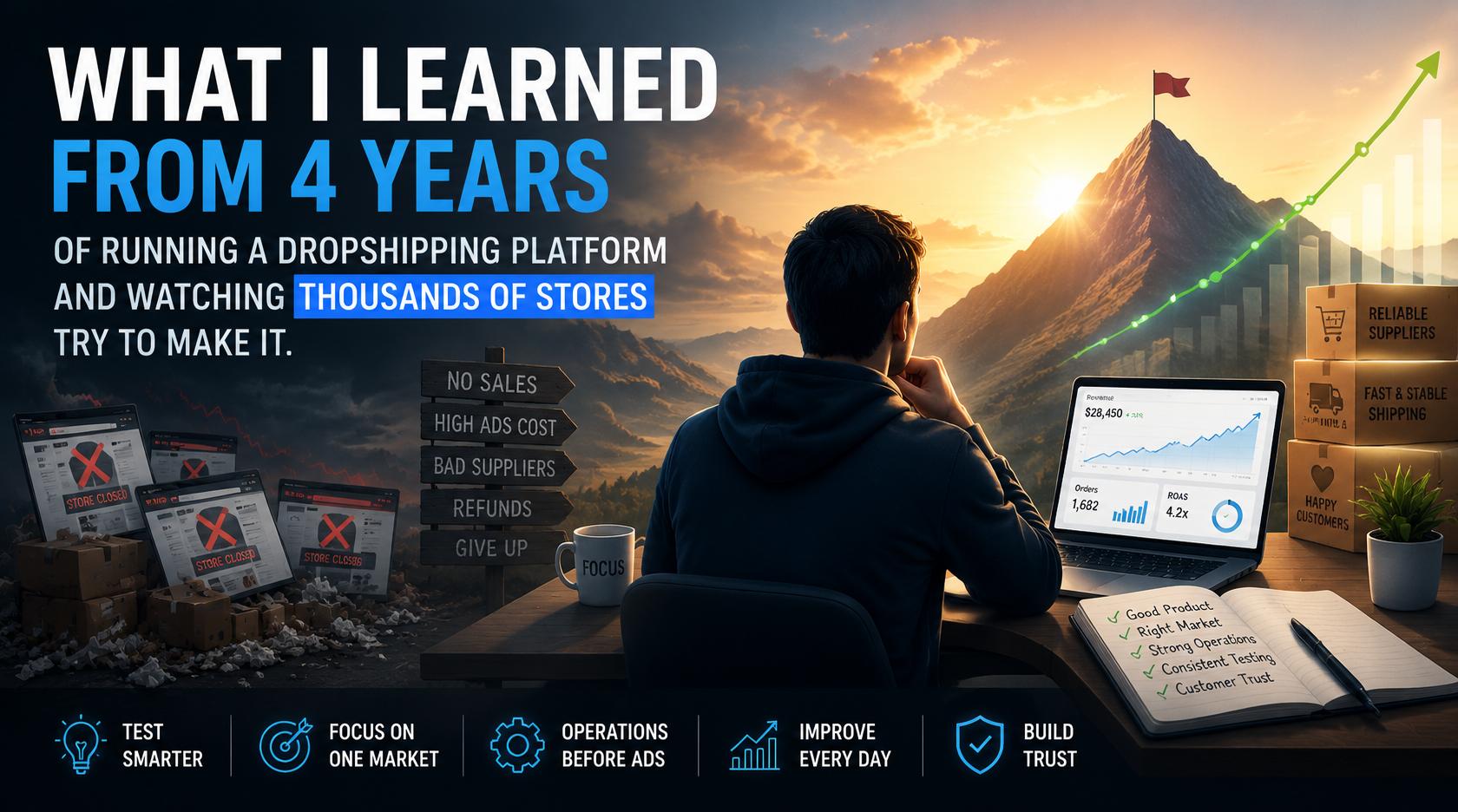
Over the past 4 years working on a dropshipping and sourcing platform, I’ve had a front-row seat to something most people never see:
Thousands of stores launching.
Thousands trying to scale.
And only a small percentage actually making it long-term.
At first, I thought success was mainly about product selection.
I was wrong.
1. Most stores don’t fail because of products
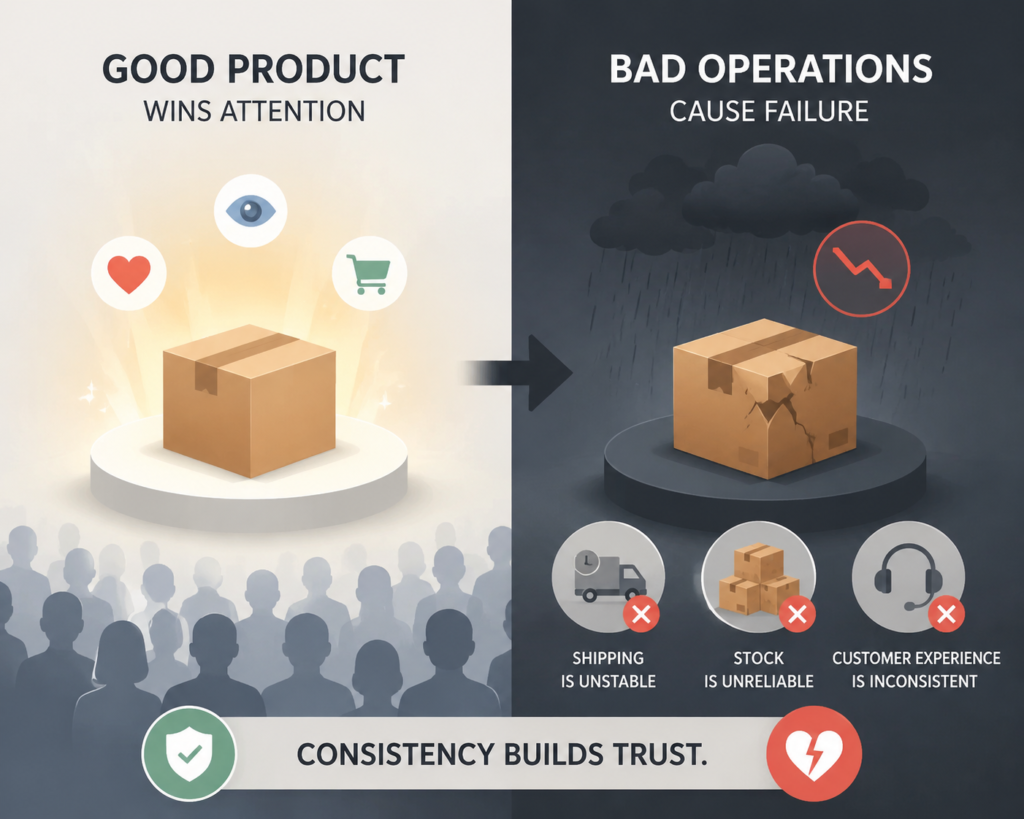
Good products win attention.
But they don’t guarantee survival.
What I’ve consistently seen is this:
- Stores fail because of operations, not ideas
- Not because the product is bad, but because execution breaks
- Not because demand is low, but because consistency disappears
A winning product can still collapse if:
- Shipping is unstable
- Stock is unreliable
- Customer experience is inconsistent
2. Speed matters — but reliability matters more
In dropshipping, everyone chases “fast shipping”.
But what actually builds sustainable stores is:
- predictable delivery time
- stable fulfillment pipeline
- clear tracking updates
- controlled processing time
Customers don’t forgive uncertainty, even if they love the product.
3. The invisible killer: operational chaos
Most stores don’t die suddenly.
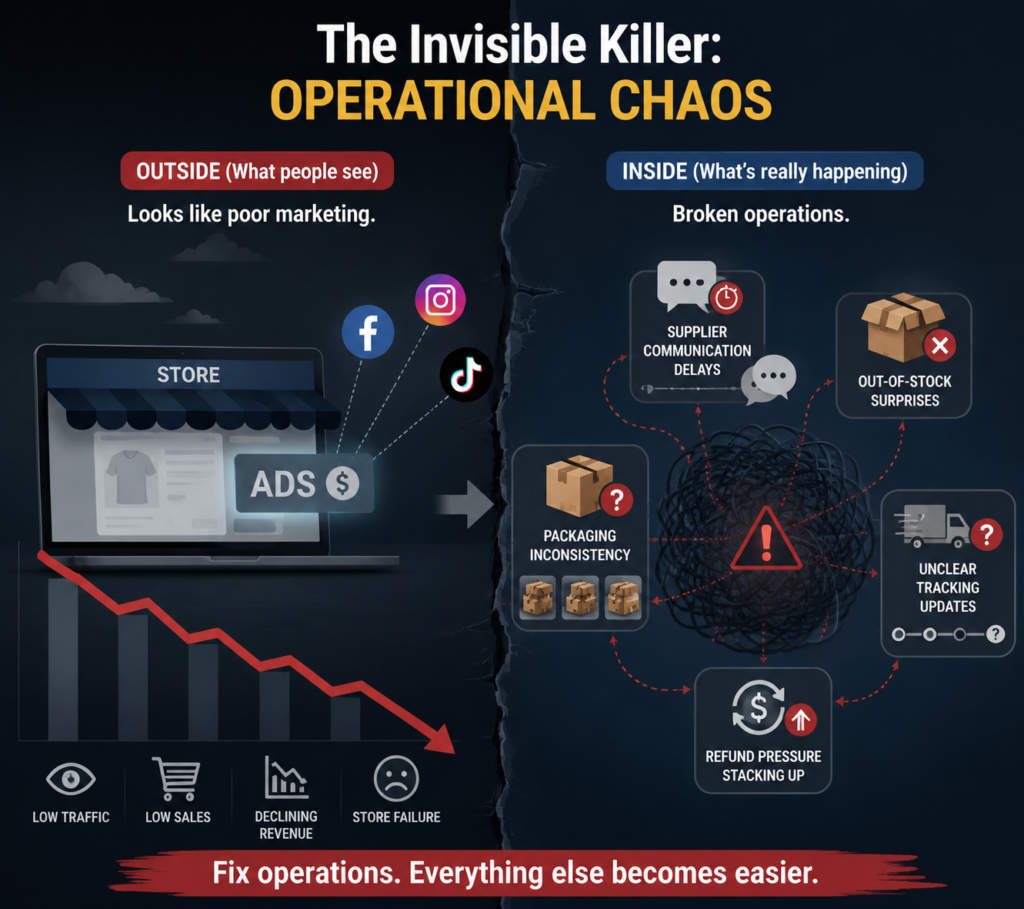
They slowly collapse due to:
- supplier communication delays
- out-of-stock surprises
- packaging inconsistency
- unclear tracking updates
- refund pressure stacking up
From the outside, it looks like “poor marketing”.
Inside, it’s usually broken operations.
4. Marketing brings traffic — operations keep it
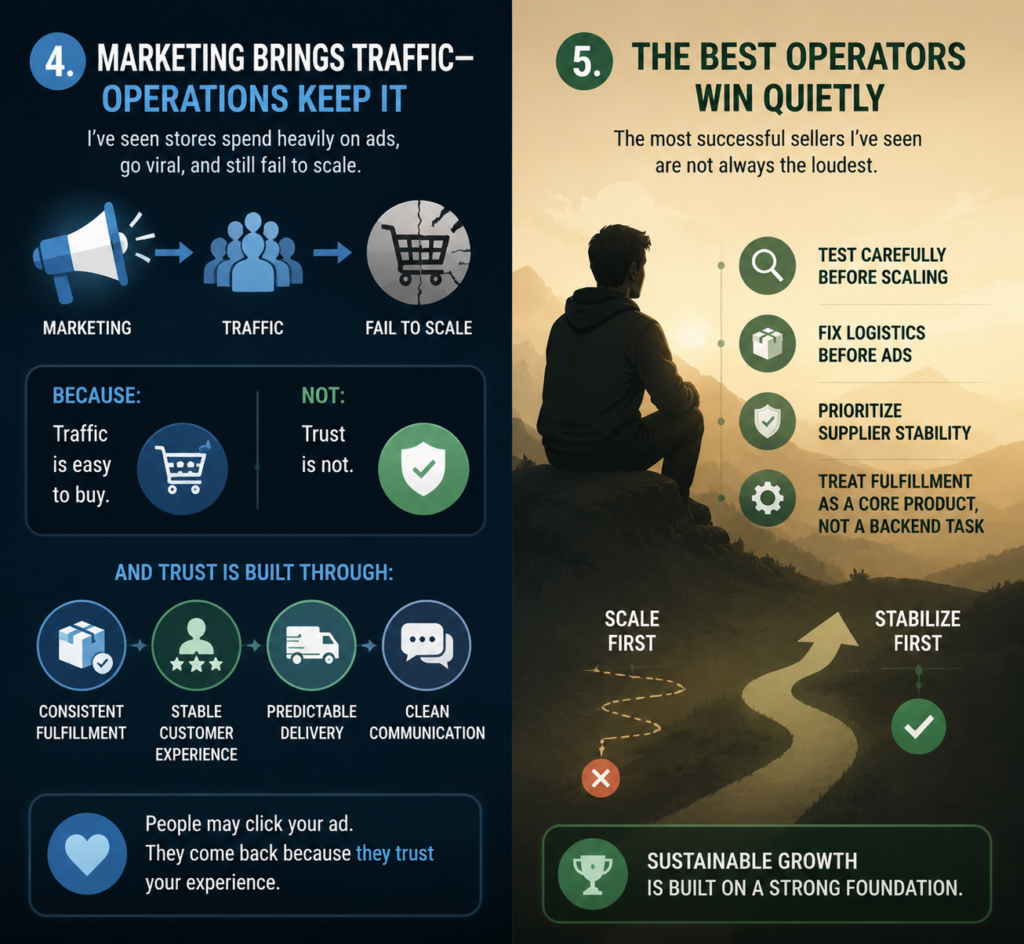
I’ve seen stores spend heavily on ads, go viral, and still fail to scale.
Because:
Traffic is easy to buy.
Trust is not.
And trust is built through:
- consistent fulfillment
- stable customer experience
- predictable delivery
- clean communication
5. The best operators win quietly
The most successful sellers I’ve seen are not always the loudest.
They are the ones who:
- test carefully before scaling
- fix logistics before ads
- prioritize supplier stability
- treat fulfillment as a core product, not a backend task
They don’t scale first.
They stabilize first.
Final thought
After 4 years in this space, one thing is clear:
Dropshipping is not just a marketing game.
It’s an operations game disguised as marketing. The winners are not just the ones who find trends —
but the ones who can deliver them reliably at scale.