
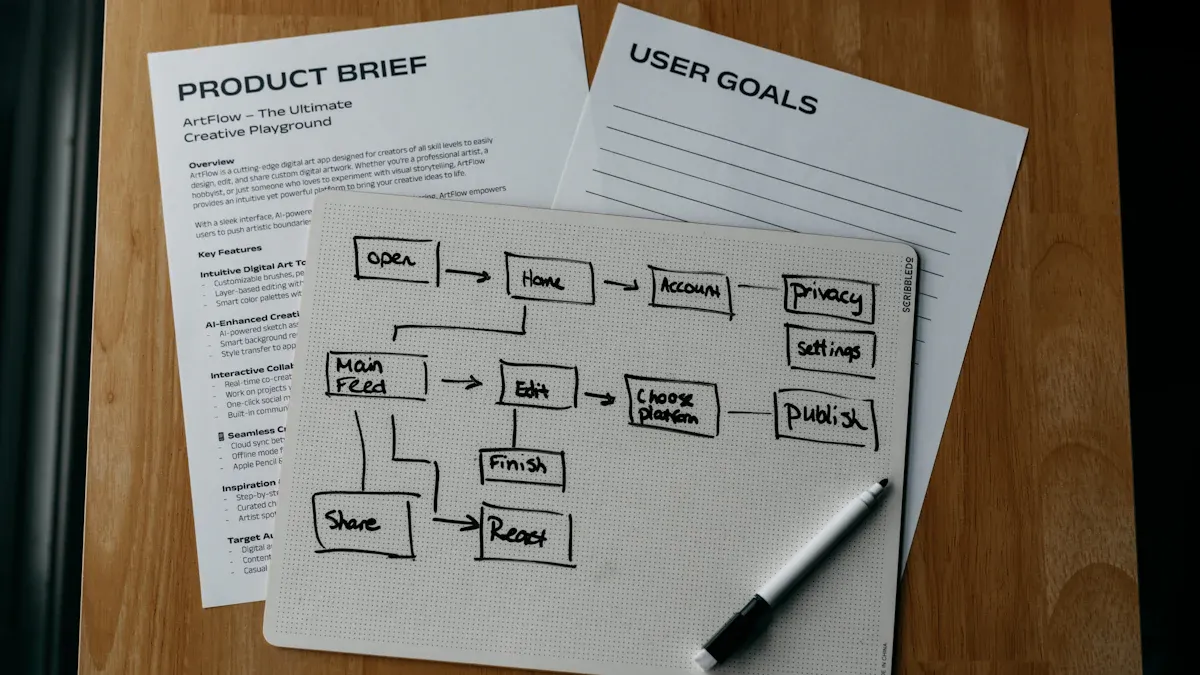
A product specification sheet is a control document between the buyer and the supplier. It turns a product idea into measurable requirements for quoting, sampling, production, inspection, packaging, and shipment. Without one, teams may approve a sample while the production batch follows a different interpretation.
Key Takeaways
- Write requirements so a supplier and inspector can measure them in the same way.
- Give every version a revision number and approval owner.
- Use the specification again during sampling, production, inspection, and receiving.
What a commercial specification sheet should contain
| Section | Typical content | Why it matters |
|---|---|---|
| Product identity | SKU, product name, version, intended use, and reference images | Prevents teams from working on different products |
| Dimensions and materials | Measurements, tolerances, material grade, weight, color, and finish | Creates inspectable acceptance criteria |
| Function and performance | Output, capacity, operating conditions, test method, and failure definition | Connects the product promise to QC |
| Packaging and labeling | Unit pack, carton, inserts, marks, barcode, and destination instructions | Protects warehouse and delivery accuracy |
| Commercial controls | MOQ, sample, tooling, lead time, inspection, approval, and change process | Aligns the quote and the production plan |
Do not bury critical requirements in chat messages. Put them in the controlled document and link all supplier, sample, and inspection records to the same version.
Make requirements measurable
Replace vague words with a measurable condition. “Premium material” is not an inspection criterion. A better requirement identifies the material, grade, thickness, finish, test, or reference sample that defines acceptance.
- Instead of “blue,” specify a color reference or approved sample.
- Instead of “strong,” specify a test condition or load requirement.
- Instead of “good packaging,” specify materials, dimensions, drop or protection requirements, and carton marks.
- Instead of “fast delivery,” specify the milestone that starts lead time and the required warehouse receiving date.
For products sold in Spain or Japan, keep destination-market labeling or documentation requirements in a separate reviewed section when they need local confirmation.
Control revisions from sample to mass production
- Issue the initial brief with a revision number.
- Record supplier questions and agreed answers.
- Attach sample photos, measurements, test results, and approval notes.
- Update the specification after every approved change.
- Send the final version to procurement, supplier, inspector, warehouse, and fulfillment teams.
If the sample is approved but the production version is not reconnected to the approved specification, the sample has not actually controlled the order.
Write one inspectable requirement from start to finish
Start with a product characteristic that affects the buyer’s intended use. State what will be measured, the unit of measurement, the method, and the acceptance condition. Add a drawing or reference image when words alone leave room for interpretation. The specification should let the supplier and inspector reach the same conclusion from the same evidence.
For a hypothetical storage container, “lid fits well” is incomplete. A useful requirement would identify the matching container and lid versions, the fit test, the agreed operating conditions, and the defect that would fail the test. The product owner and technical reviewer must choose the actual values. Do not copy an arbitrary tolerance from a generic template simply because it looks precise.
Check whether the supplier can perform the proposed measurement consistently. If special equipment or a destructive test is required, agree who performs it, when it occurs, and how the result is recorded. A requirement that no one can measure during the agreed process creates an approval gap rather than quality control.
Use a requirement register alongside the visual sample
A sample is valuable evidence, but it may not describe every requirement. Number the important characteristics and connect them to the sample, drawing, or written method. Record which characteristic is controlled by which reference. Resolve conflicts before production; do not leave the factory to decide whether the photograph or the dimension table should take precedence.
- Identity: give the SKU, product version, material description, and any approved variants.
- Requirement: describe the characteristic in terms that a supplier can confirm and an inspector can check.
- Evidence: identify the measurement record, test result, photograph, or approved reference sample.
- Decision: state the acceptance condition and the person who can approve a deviation.
- Revision: record when the requirement changed and which orders or lots use the new version.
Include packaging as a controlled requirement rather than an attachment added at the end. Specify unit packs, carton quantities, variant identification, inserts, and warehouse labels where relevant. Have destination requirements reviewed by the appropriate person for the actual product and market. This article’s worksheet is an operational aid, not a product-specific compliance specification.
Process a change without losing the approved baseline
Imagine that a buyer changes the carton quantity after approving the product sample. Record the request, reason, affected SKU, proposed effective lot, and expected cost or timing impact. Ask the supplier and receiving team to confirm whether the change affects packing dimensions, labels, pallet configuration, or the inspection plan.
Approve the revised document before applying it to production. Mark the earlier version as superseded while preserving it for traceability. Tell the inspector which lot uses which version and how to identify them. If old and new versions are both acceptable, document the conditions rather than assuming every team understands the transition.
Use receiving evidence to improve the next revision
After the first shipment, review discrepancies between the specification and what the receiving team could verify. Some requirements may be clear to production but difficult to inspect at arrival. Others may omit an important warehouse or customer-channel constraint.
Convert those findings into a proposed revision, obtain technical input, and explain the commercial reason to the supplier. Keep corrective changes distinct from optional product improvements. This prevents a replacement order from quietly becoming a new design while everyone believes they are repeating the approved product.
How Fishgoo Helps
Fishgoo can help coordinate supplier communication, sampling, inspection evidence, warehouse receiving, and shipping. A Fishgoo project brief should reference the approved specification and clarify which teams receive updates and inspection records.
Discuss your China sourcing and fulfillment workflow with Fishgoo.
FAQ
Who should own the product specification sheet?
The importer or brand should own the commercial requirement. Suppliers, inspectors, and service partners can contribute technical information, but the buyer should control approval and revision.
Can a product page replace a specification sheet?
Usually not for commercial production. A product page may support initial research, but it rarely includes the controlled measurements, tolerances, packaging, tests, and change rules required for production.
When should the sheet be updated?
Update it whenever a material, dimension, function, packaging, label, quantity, or acceptance criterion changes, and require approval before the change enters production.
See Also
How to Evaluate an Integrated China Sourcing and Fulfillment Partner
Reducing Commercial Returns Through Sourcing, QC, and Fulfillment Controls
OEM vs ODM for Brands Selling in Spain and Japan
How Traditional Importers Can Use Chinese Sourcing Platforms Across Language Barriers